found the problem.
I couldn’t believe it had anything to do with the software.
The problem was that a screw on a transformer was loose, probably due to changing the SD card the position of the screw changed (is near the SD card) hence sometimes a click over the speakers (earth/mass problem)
I am using raspberry pi 5 8gbram and a official rpi psu with a 27w.
First, i tried to install latest pi os 64bit on 64gb micro sd card using rpi imgr. Then boot,
2nd, after successfully boot from sd card. I manage to sync time and date, then execute sudo apt update
Sudo apt upgrade.then reboot,
3rd, update eeprom as instructed above.reboot - shutdown and remove micro sd to pi.
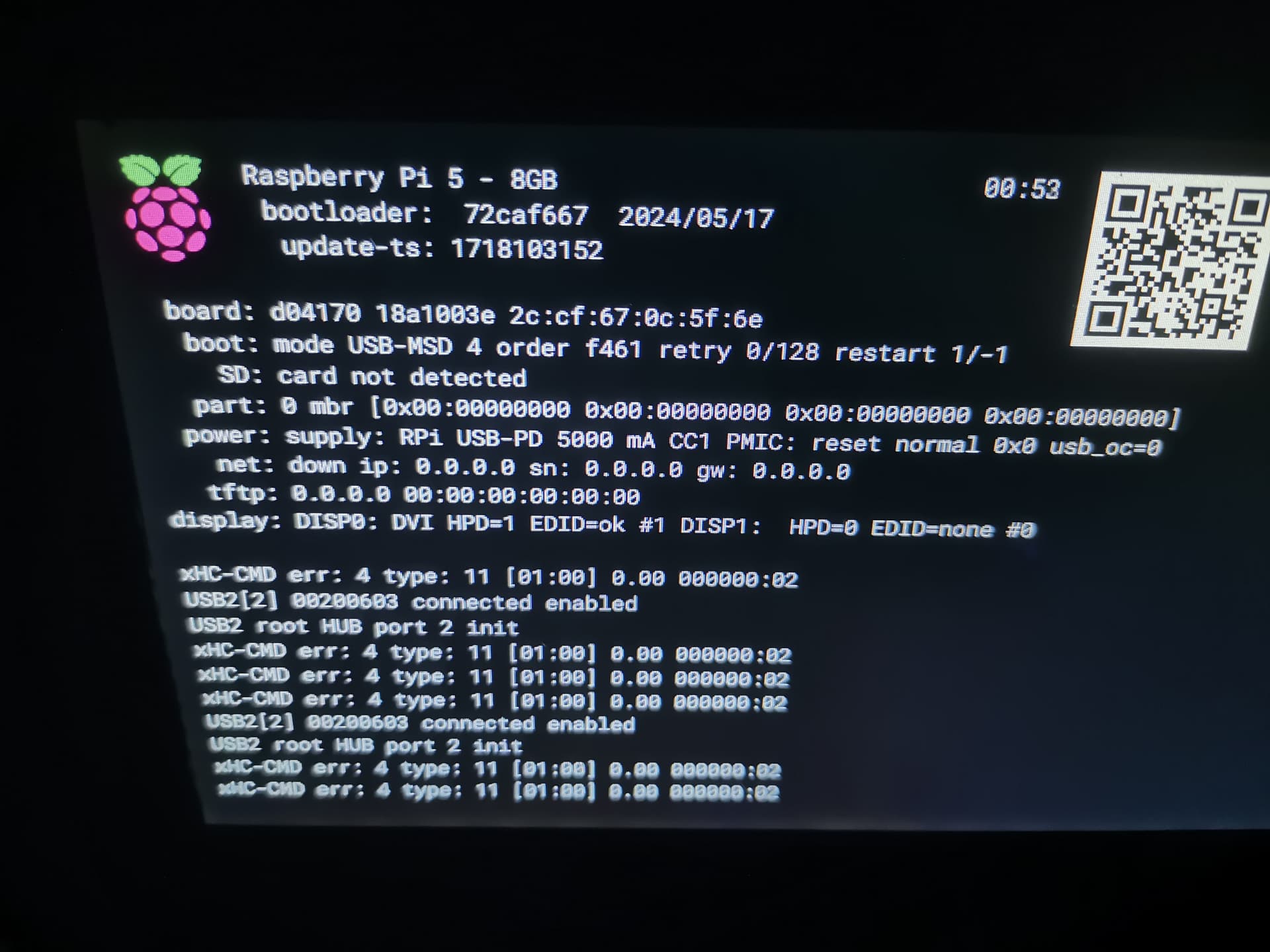
4th, on the other hand i’d install volumio iso. To my WD 60gb SSD/usb. And try to boot from usb/ssd, unfortunately it didn’t boot up.
So i tried to add these usb_max_current=1 on sudo nano /boot/firmware/config.txt and try to boot up again, unfortunately it didn’t boot up ssd led light suddenly off.
We need to dig further. Volumio OS is in .img format, not .iso. Release download .zip file need to be decompressed before flashing; it contains md5sum and image files. Can you kindly detail this part of flashing to the USB?
What is the exact model of your USB device?
This is interesting. Since your RPi4 boots from USD and RPi5 does not, this alone suggests there is something not quite right with RPi5. On PI5 USB port groups have different controls, try from USB3 centre top first, from centre bottom. Next try with USB2 side top, then try side bottom. Post your results.
Hi!
Impressed! Got better sound with 3.703 compared to previous stable version; a bit more transparancy and 3D on my high end hifi system using RIVO. Thanks!!
I noticed the same thing even with version 3.695, but I had convinced myself it was just a mental bias . What do you think, @nerd ? Are there technical improvements in the latest updates that could have actually enhanced (or simply modified compared to the previous versions) the sound?
Quite an effort went into the overhaul of the Volumio ecosystem, OS and backend. One of the main technical changes is underlying kernel, which in turn improves timings and that impacts sampling.
From all gathered feedback to date, all devs working on the this release did a very good job. Despite various posts across forums, devs do listen, do the triage and act. Sometimes it is challenging to match expectations of impatient modern social media culture, where a simple change on the surface may become very complex across the entire ecosystem and as such, takes time.
There is another shift in the woodworking already, whereas this particular beta effort became a cornerstone.
Thank you for the feedback. I work at an IT company and, although I’m not a developer, I know well how much work can go into a complex development that may be perceived as just a small detail.
And I agree, today’s culture is getting us used to having everything and we often fall into the temptation of wanting everything right away.
I love what has been done with Volumio and the continuous efforts to improve the product even further, and I have no doubt that the developers are putting in their utmost effort. I chose to purchase the lifetime license primarily (if not exclusively) to support the great work you are doing.
If I may offer just a humble suggestion: communicate, be transparent about the work you do.
As users, we can be insistent on various improvement requests, but I believe it would be enough to communicate that the request has been acknowledged or, on the contrary, that it is not deemed necessary (for x reasons).
From the user’s perspective, it can be frustrating to report an issue or suggest an improvement and not receive any response.
Again, this is just a suggestion and not a criticism, keep up the incredible work.
Back to the topic, we can indeed say that there are concrete elements to justify an improvement in audio performance, and this is great!



 . What do you think,