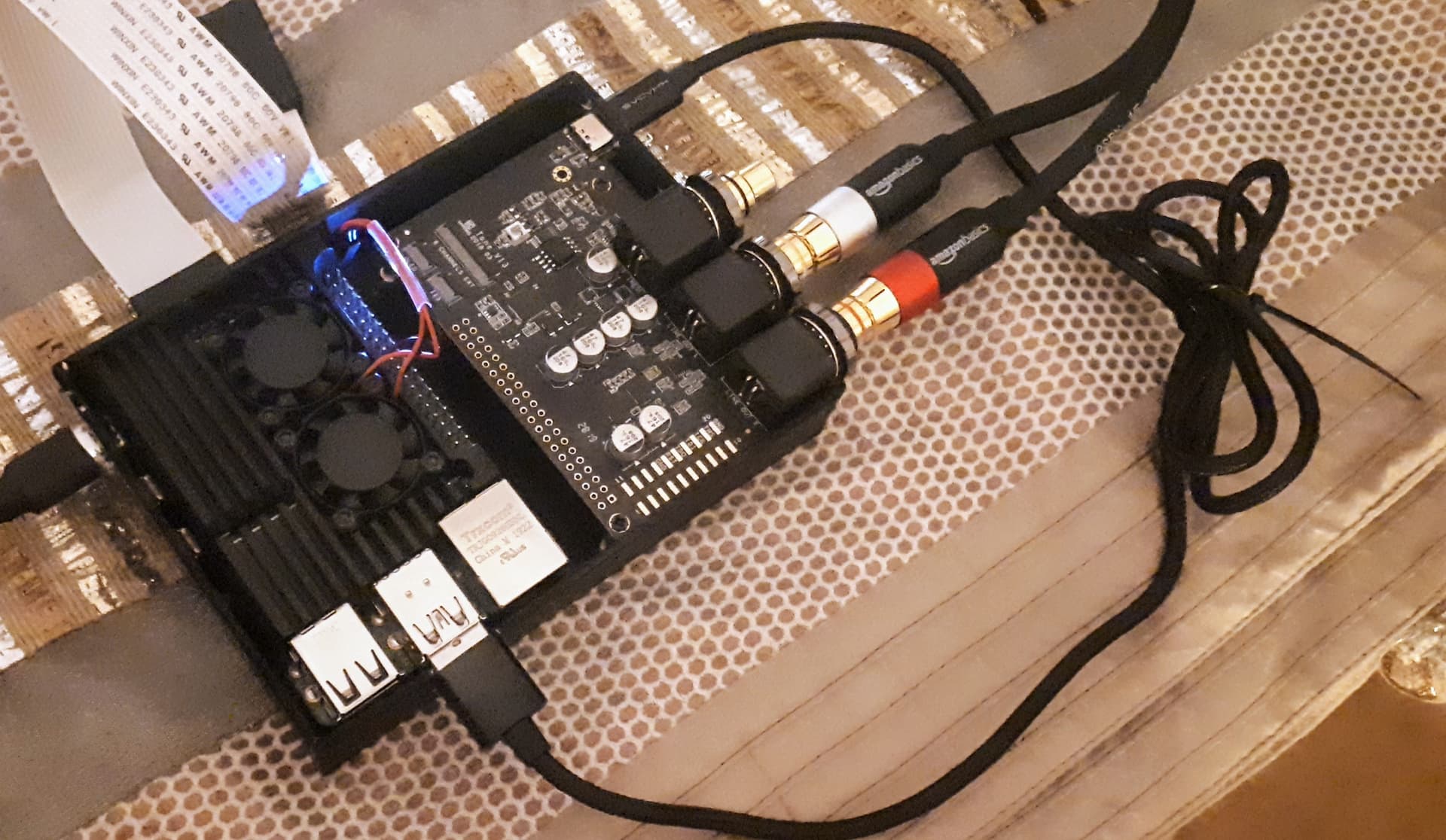
Using a Raspberry Pi 5 with an InnoMaker HiFi DAC Pro Hat.
The main data source is a dedicated 2tb SSD directly connected to the Raspberry.
I desire (for pure convenience) an alternative audio input from a pair of linked high-capacity (700 disks total) Sony CD changers that contains a subset (copies of very expensive physical player piano “albums”) of my full collection all of which is on the dedicated SSD in .OGG format.
The source input is currently SPDIF via a Toslink to USB adapter which in turn is fed by a dedicated Bluetooth transceiver linked to the CD changers. I can if necessary change to analog audio.
The setup works using Premium Volumio as confirmed by the trial period.
I’ve carefully studied the added features of “Premium” Volumio but due to the exclusive use as a a dead head player for a modern player grand piano with electronic acoustic accompaniment I find nothing in the “premium” product of potential use. My personal library is so large (and so expensive in every sense of the term) that I have zero need or desire for any modern player piano streaming service and I can access the rather lame “free” one included with my player system via alternative control that completely bypasses the Raspberry Pi.
Do I have any option beyond the subscription only premium version for nothing but a convenience I presume to be very rarely used? I can literally just swap the physical input (stereo mini 1/8") to the so-called “AMI Box” (standing for Analog Midi Interface) that acts as an accessory “smart” input to the PianoForce Performer player.
I have all requisite skills, tools and equipment to produce a physical interface to the Raspberry Pi to act as a separate physical switch for the “AMI Box” input provided a suitable plug-in or other means of certain detection (with variable hysteresis) that Volumio is actively playing. The opposite (detecting activity from the changers to bypass the Volumio’d Raspberry) is also possible. My preference though is K.I.S.S. to avoid yet another complication in an already extremely complicated system; ergo is there any way–no matter how inconvenient–to add this specific alterative audio input without using the premium product?
I don’t mind paying for software but I have no fondness for the subscription model–especially in this instance when only a single, rarely used feature is required.
Does your Sony CD player changer have a coaxial digital output?
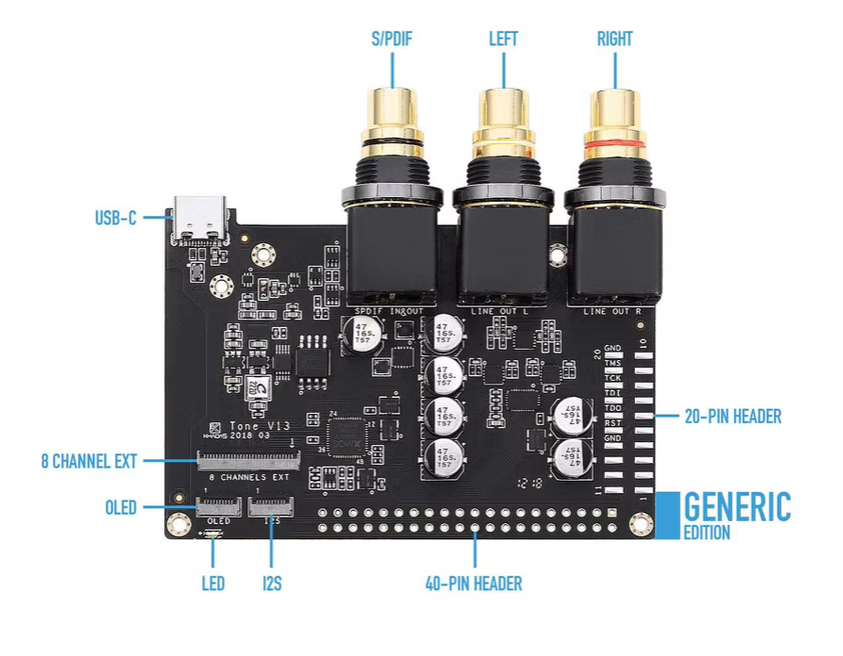
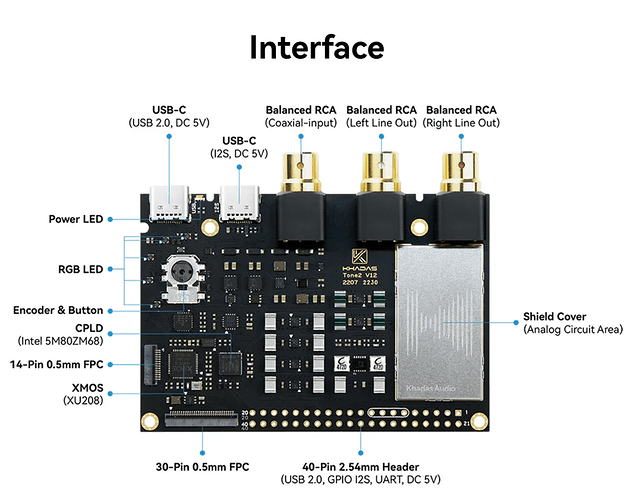
If so, the Khadas Tone 1 or Khadas Tone 2 Maker card has a coaxial digital input.
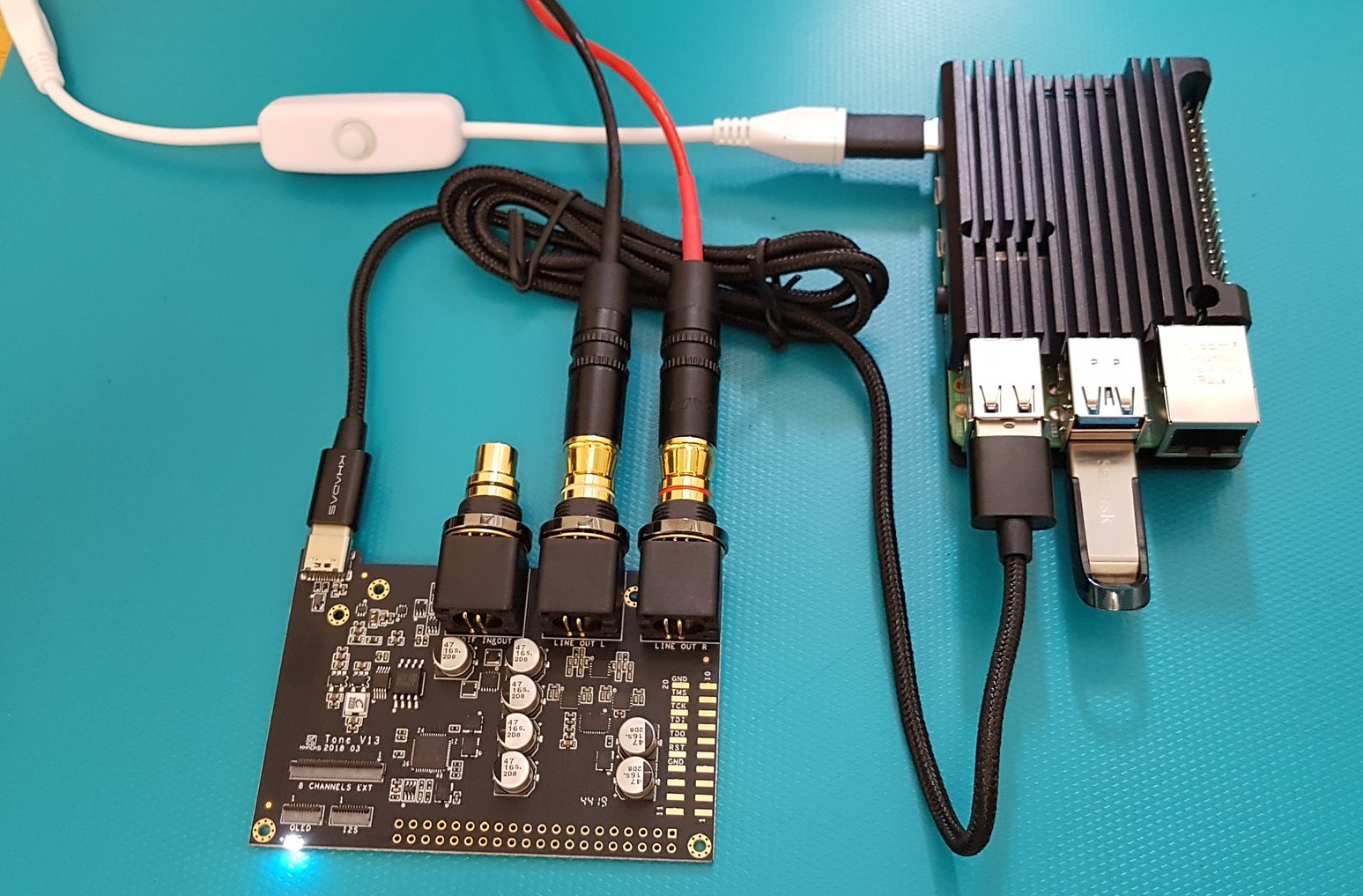
You can connect the Khadas Tone 1 or Khadas Tone 2 Maker to a Raspberry Pi via USB.
The Khadas Tone 1 has 2 x RCA outputs and one RCA digital coaxial input.
The Khadas Tone 2 Maker has 2 x standard and balanced RCA outputs and a single standard and balanced RCA input.
The Khadas Tone card’s digital input works automatically when there’s no Volumio music playing.
I don’t have any device (CD player) with a coaxial output to test Khadas Tone with coaxial in if it works with Volumio Free.
The changers each have their own SPDIF (Toslink) output but when they are linked (via standard RCA input/output jacks plus a mono 1/8" phone plug for control data) allowing back-and-forth continuous play the SPDIF outputs go dead leaving the RCA output of the “master” unit as the only option. I discovered this little fact only after purchasing a Toslink to digital USB adapter to use as the input to the Raspberry Pi.
I did a bit of searching regarding Khadas Tone 1 Maker. I would I believe it will work via a Toslink to RCA coaxial converter. The complication for me is that it must it seems connect to the Raspberry Pi via USB instead of installing like a my Innomaker Hi-Fi “Hat.” I’m genuinely running out of suitable mounting locations underneath my piano and really don’t want to add another enclosure large enclosure/device.
Do you know if the Kadash board can be installed inside of a Raspberry Pi enclosure to connect via a USB-C to USB-A adapter?
I’ve set up my existing sound hat to use use its own dedicated power supply as recommended for best performance. I get superb audio and perfect operation of the player unit–this is a difficult task because the interface to the player control unit has to instantly* determine which of three distinct encoding methods are used on a given title. Some people with experience with the interface told me i was fighting a loosing battle when expecting it to work with mixed encodings.
*one type of encoding issues a split-second squeal from the accompaniment system before it “catches” the encoded MIDI signal. The squeal is an audio interpretation of the MIDI carrier wave. A fixed volume of 85% on Volumio results in a low amplitude squeal with erratic player operation on one type of encoding while 75% results in no player operation whatsoever from two types. I use 80% and since increments are by 5% I can’t tweak further to determine if the momentary initial squeal with the one type of encoding is “normal” behavior.
Thanks again! I’ll definitely keep this in mind for the future.
Thank you. I’ll keep that in mind even if it does effectively double the footprint of the Raspberry Pi. I purchased a year of the premium subscription as I have more important things to complete like staged auto-shutdown for the audio accompaniment system and a custom self-powered loudspeaker unit to replace temporary speakers and an am I’ve used for experimentation of general size/type/location.